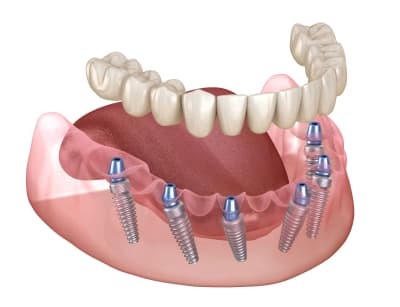
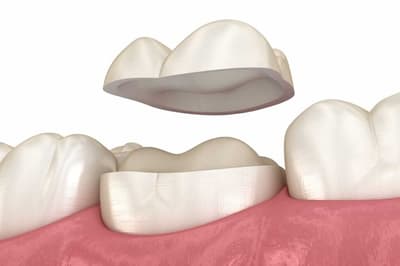
Losing all or most teeth can affect daily life in many ways. It can make chewing difficult, change speech, affect facial appearance, and reduce confidence while smiling. For people looking for a fixed alternative to removable dentures, full-mouth dental implants can be an effective solution.
Two of the most commonly discussed options are All-on-4 and All-on-6 dental implants. Both treatments use dental implants to support a complete set of fixed teeth in the upper jaw, lower jaw, or both. However, the number of implants used, the level of support, and the right patient profile can be different.
So, which is better: All-on-4 or All-on-6?
The answer depends on your jawbone, bite strength, gum health, medical condition, and long-term treatment needs. More implants do not automatically mean a better result. The best option is the one that gives you stable, safe, and well-planned support for your new teeth. Research has found similar overall survival outcomes for full-arch restorations supported by fewer than five implants and those supported by five or more implants when cases are selected and treated appropriately.
At Zen Dental Studio, full-mouth dental implant treatment is planned individually after a detailed clinical examination and digital assessment.
What Are All-on-4 Dental Implants?
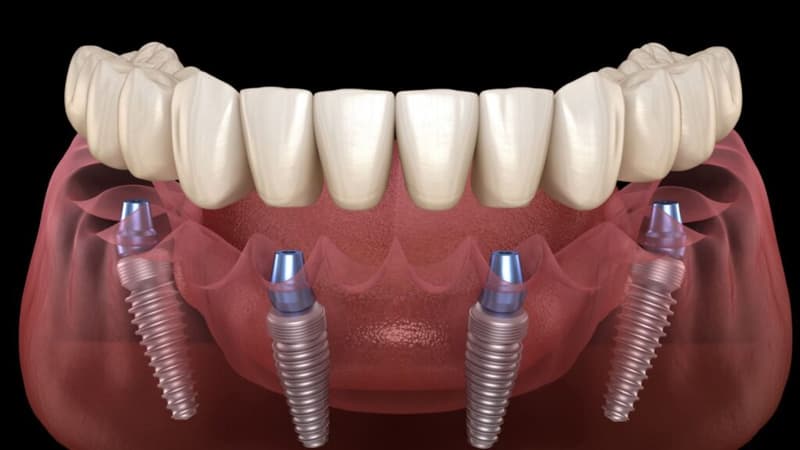
All-on-4 is a full-arch dental implant treatment that uses four implants to support a complete fixed bridge of teeth.
In most cases, two implants are placed in the front area of the jaw and two are placed toward the back. The rear implants may be tilted at an angle to make better use of the available jawbone. This approach can be useful for patients with bone loss in the back part of the jaw.
The implants act like artificial tooth roots. Once they heal and become stable, they support a full bridge that replaces all missing teeth in that jaw.
Who May Benefit From All-on-4?
All-on-4 dental implants may be suitable for patients who:
- Have lost all teeth in one jaw
- Have several failing, loose, broken, or severely damaged teeth
- Are unhappy with removable dentures
- Have moderate bone loss
- Want fixed teeth that do not need to be removed daily
- Have suitable bone quality in strategic areas of the jaw
- Want a treatment option using fewer implants
All-on-4 is not a shortcut or a one-size-fits-all procedure. Proper planning is essential to make sure the implants are placed in the right position and can support the final teeth safely.
What Are All-on-6 Dental Implants?
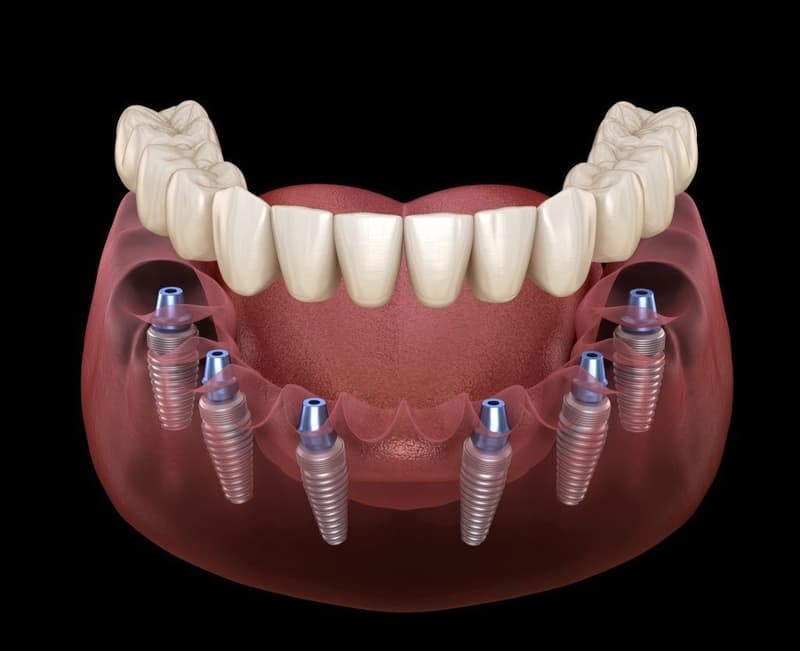
All-on-6 dental implants use six implants to support a complete fixed bridge of teeth.
Like All-on-4, this treatment can replace all missing teeth in the upper or lower jaw. The main difference is that two additional implants are placed to provide extra support for the final prosthesis.
With six implants, chewing forces can be spread across more implant sites. This may be useful for patients who have stronger bites, grind their teeth, or need additional stability because of their bone quality or jaw structure.
Who May Benefit From All-on-6?
All-on-6 dental implants may be considered for patients who:
- Have adequate bone for six implants
- Have high bite pressure
- Grind or clench their teeth
- Have a long dental arch that requires added support
- Have lower bone density
- Have natural teeth or fixed crowns in the opposite jaw
- Need a more reinforced full-arch implant design
All-on-6 is often selected when the dentist believes that more implant support will improve the long-term predictability of the treatment.
All-on-4 vs All-on-6: Understanding the Main Difference
The basic difference is simple: All-on-4 uses four implants, while All-on-6 uses six implants.
However, the real decision involves much more than implant count. The dentist needs to evaluate the quality and amount of bone, the patient’s bite pattern, the position of the jaws, the condition of the gums, and the design of the final bridge.
| Feature | All-on-4 Dental Implants | All-on-6 Dental Implants |
|---|---|---|
| Number of implants | Four implants per arch | Six implants per arch |
| Support for final bridge | Strong support in appropriate cases | Additional support points |
| Surgical approach | Fewer implants are placed | More implants are placed |
| Bone requirement | Can be useful with moderate bone loss | Usually requires sufficient bone in more areas |
| Bite-force suitability | Suitable for controlled bite forces | May be preferred for heavy bite forces |
| Prosthesis support | Depends on implant position and design | May distribute pressure over more implants |
| Ideal patient | Suitable bone and balanced bite | Higher chewing demands or added stability needs |
A large study that followed patients for three to 13 years found no significant overall difference in implant or prosthesis survival between four-implant and six-implant immediate full-arch restorations. This means both approaches can work well when planned for the right patient.
Is All-on-6 Better Than All-on-4?
All-on-6 is not automatically better than All-on-4.
Six implants can provide more points of support, but the right option depends on what your mouth needs. A patient with good bone quality, balanced bite forces, and properly positioned implants may achieve excellent results with All-on-4. Another patient with teeth grinding, low bone density, or stronger chewing forces may benefit from the additional support of All-on-6.
A recent clinical study found that four-implant and six-implant fixed full-arch restorations had high and comparable mid-to-long-term implant survival when patients were selected using a structured, patient-centred approach.
The decision should never be based only on a claim that one treatment is superior for everyone. The safer question is: Which option is more suitable for your bone, bite, and long-term oral health?
When Is All-on-4 a Better Choice?
All-on-4 may be a good option when the patient has suitable bone in the front part of the jaw and does not require additional implant support because of high bite pressure or complex oral conditions.
All-on-4 May Be Recommended When:
- You have moderate bone loss in the back of the jaw
- The front jawbone has enough strength for implant placement
- Angled posterior implants can be placed safely
- You have a stable and manageable bite
- You do not have severe teeth grinding habits
- You want fixed teeth using fewer implants
- Your dentist can create a stable bridge design with four implants
For many patients, especially those with suitable lower-jaw bone, All-on-4 can provide strong and reliable support. The lower jaw often has denser bone than the upper jaw, although every patient must be evaluated individually.
When Is All-on-6 a Better Choice?
All-on-6 may be preferred when added implant support can improve the stability and strength of the final full-mouth restoration.
All-on-6 May Be Recommended When:
- You have enough bone volume for six implants
- You grind or clench your teeth
- You have a strong bite
- You have lower bone density
- You have a long arch that needs added support
- You have natural teeth or a fixed bridge in the opposite jaw
- You need extra stability for the final prosthesis
- Your dentist wants to reduce the load carried by each implant
In some higher-risk clinical conditions, All-on-6 has been found to be more predictable in certain measurements. These conditions include smoking, bruxism, low bone density, older age, opposing natural or fixed teeth, and long clinical crowns.
This does not mean that every patient with one of these factors must choose All-on-6. It means the dentist should consider these details carefully before making a recommendation.
Why Bone Quality Matters
Jawbone quality is one of the most important factors in full-mouth dental implant treatment.
Dental implants need enough healthy bone to become stable. Before recommending All-on-4 or All-on-6, the dentist evaluates your jawbone using dental X-rays, CBCT scans, and digital planning tools.
The assessment usually checks:
- Bone height
- Bone width
- Bone density
- Gum condition
- Nerve position in the lower jaw
- Sinus position in the upper jaw
- Bite relationship
- Space available for the final teeth
In some All-on-4 cases, angled implants can help use available bone more efficiently. In other cases, the bone may be suitable for six implants, allowing the dentist to choose All-on-6 for additional support.
The goal is not to place the highest possible number of implants. The goal is to place the right number of implants in the safest and strongest positions.
What About Immediate Teeth?
Many people searching for All-on-4 or All-on-6 dental implants ask if they can receive teeth soon after surgery.
In selected cases, a temporary fixed bridge may be placed on the same day or shortly after implant placement. This is known as immediate loading. However, it is not suitable for every patient.
Immediate teeth depend on several factors:
- Initial implant stability
- Bone quality
- Implant position
- Bite forces
- General health
- Gum health
- Ability to follow a soft-food diet during healing
- Absence of uncontrolled teeth grinding
The first set of teeth is often temporary. It allows the implants to heal while the patient has a fixed smile. After the healing period, the final bridge is designed with close attention to fit, comfort, appearance, speech, and chewing function.
Does More Implants Mean More Success?
Not always.
Implant success depends on many details, not just the number of implants. Four correctly positioned implants in healthy bone may perform better than six implants placed in poor positions or under unfavourable bite forces.
The important factors for long-term success include:
- Correct treatment planning
- Healthy gums and bone
- Accurate implant placement
- Good oral hygiene
- Proper bite adjustment
- High-quality bridge design
- Suitable restorative material
- Avoiding tobacco use
- Managing diabetes and other health conditions
- Regular dental reviews
A systematic review that included 93 studies found no statistically significant difference in implant or prosthesis survival between fewer-than-five and five-or-more implant designs for complete-arch fixed prostheses.
This supports the idea that the treatment should be selected on clinical need, not implant count alone.
All-on-4 vs All-on-6 for the Upper Jaw
The upper jaw often needs more detailed planning because the bone can be softer than the lower jaw. Bone loss in the back upper jaw may also be affected by the maxillary sinus.
For some upper-jaw patients, All-on-4 may work well when implants are planned carefully and placed in strong available bone. For others, All-on-6 may offer added stability because the load can be spread across more implants.
A five-year clinical trial of fixed upper-jaw prostheses supported by four versus six implants reported comparable survival rates and biological and prosthetic complication levels for both groups.
The final decision should come after a CBCT scan and a complete evaluation of your bone, bite, and smile design.
All-on-4 vs All-on-6 for the Lower Jaw
The lower jaw often has denser bone, which can make it suitable for either All-on-4 or All-on-6 in many patients.
Four implants may be sufficient in standard lower-jaw full-arch cases when the implants are well positioned and the bite is carefully controlled. A recent consensus review noted comparable survival outcomes between four- and six-implant designs in many lower-jaw full-arch rehabilitation cases.
However, All-on-6 may still be chosen if there is a strong bite, bruxism, or a need for increased support based on the prosthetic design.
The Importance of Final Teeth Design
A successful implant treatment is not only about surgery. The final teeth are equally important.
The bridge must be designed to balance bite forces and avoid placing too much pressure on any one implant. A poorly designed bridge can lead to issues even if the implants are healthy.
The dentist considers:
- Tooth shape and size
- Smile appearance
- Lip support
- Speech
- Bite alignment
- Chewing comfort
- Bridge material
- Access for cleaning
- Long-term maintenance needs
Dr. Roopa Kanumuri focuses on careful assessment and treatment planning so that full-mouth dental implant solutions support both function and natural-looking smiles.
How to Care for All-on-4 or All-on-6 Dental Implants
Implants cannot get cavities, but they still need regular care. Food particles and plaque can collect around the bridge and gums. Without proper cleaning, inflammation may develop around implants.
To care for your full-mouth dental implants:
- Brush twice daily using a soft toothbrush
- Use implant-safe floss or interdental cleaning tools
- Use a water flosser if recommended
- Attend regular professional cleaning appointments
- Avoid smoking and tobacco products
- Wear a night guard if you grind your teeth
- Report looseness, discomfort, swelling, or bleeding early
- Follow the dentist’s instructions for bridge maintenance
Good maintenance helps protect both the implants and the surrounding gum and bone.
Questions to Ask Before Choosing All-on-4 or All-on-6
A full-mouth implant consultation should give you clear answers, not confusion.
Ask your dentist:
- Do I have enough bone for All-on-4 or All-on-6?
- Which option is safer for my upper or lower jaw?
- Do I show signs of teeth grinding?
- Will I receive temporary fixed teeth after surgery?
- Will I need bone grafting or another additional procedure?
- What material will be used for my final bridge?
- How should I clean under the bridge?
- How often do I need follow-up visits?
- What risks apply to my individual case?
A responsible implant dentist will explain the recommendation using your scans, oral examination, and treatment goals.
Conclusion
All-on-4 and All-on-6 dental implants are both effective full-mouth tooth replacement solutions. All-on-4 may be an excellent choice for patients with suitable bone, a controlled bite, and a need for a fixed full-arch restoration using fewer implants. All-on-6 may provide added support for patients with stronger bite forces, bruxism, low bone density, or more demanding clinical requirements.
The best choice is not about choosing the option with more implants. It is about selecting the treatment that matches your bone condition, bite, oral health, and long-term needs. A proper consultation, CBCT scan, digital planning, and personalised treatment approach are essential before making the decision.
Book an implant consultation at Zen Dental Studio, or read our guide to the best dental implants in Hyderabad to learn more about your options.
Frequently Asked Questions
Is All-on-4 better than All-on-6 dental implants?
Neither is better for every patient. All-on-4 can be highly successful for suitable cases, while All-on-6 may be preferred when extra support is needed because of bite force, bone quality, or teeth grinding.
Can All-on-4 replace all teeth?
Yes. All-on-4 dental implants are designed to support a fixed full-arch bridge that replaces all teeth in the upper or lower jaw.
Do All-on-6 dental implants last longer?
Both All-on-4 and All-on-6 can provide long-term results with correct planning, quality treatment, good oral hygiene, and regular follow-up care.
Is All-on-4 suitable for people with bone loss?
All-on-4 may be suitable for some people with moderate bone loss because angled implants can make use of available bone. A CBCT scan is needed to determine suitability.
How do I choose between All-on-4 and All-on-6?
The right choice depends on your jawbone, bite force, teeth-grinding habits, gum condition, and final bridge requirements. A detailed implant consultation is the best way to decide.