
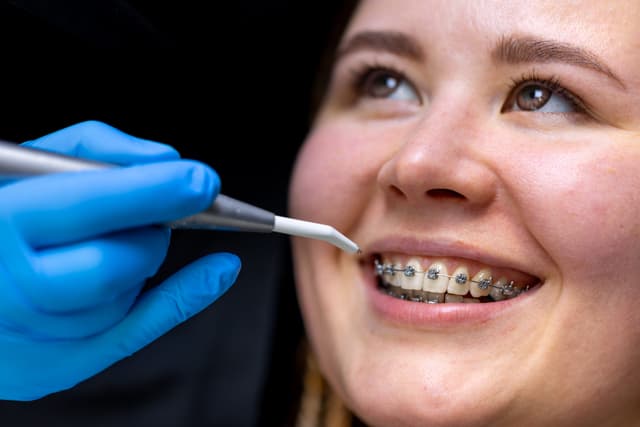
Orthodontic treatment no longer means only metal braces. Clear aligners have become a popular alternative for teens and adults who want a more discreet option. But neither choice is automatically better for every patient.
When braces may be the better fit
- Complex bite corrections or significant tooth rotation
- Cases needing precise control of tooth movement
- Patients who prefer not to depend on daily aligner wear compliance
- Certain skeletal or growth-related corrections in younger patients
When clear aligners may suit you better
- Mild to moderate crowding or spacing
- Adults who want a less visible option for work or social settings
- Patients who can wear aligners 20–22 hours daily as advised
- Easier brushing and flossing during treatment for many cases
The best option is the one that can predictably deliver your treatment goals — not just the one that looks best in photos.
What to ask at your consultation
Ask about estimated treatment time, total cost, refinement visits, retention after treatment, and what happens if aligners are not worn consistently. A digital scan and clinical exam help determine whether your case is aligner-friendly.
Conclusion
Braces and clear aligners both work when matched to the right case. A proper orthodontic assessment prevents starting a treatment that cannot finish well.
For braces or clear aligners in Nallagandla, book a consultation at Zen Dental Studio.
Frequently Asked Questions
They are discreet, but attachments and slight reflection may still be visible up close. They are far less noticeable than traditional braces for most people.
Yes, in suitable cases. Compliance and case selection are especially important for younger patients.
It varies from several months to a few years depending on complexity, age, and cooperation.